13 Dinner Table Conversation Starters That Actually Get Kids Talking in 2026
The carrot sticks were already wilting on the plate, and my seven-year-old was methodically building a mashed-potato dam. “How was school?” I asked, already knowing the answer. “Fine.” Just that one word, delivered with the flat tone of a kid who’d clearly used up all his stories on the bus ride home. I’d tried the peppy “Tell me one cool thing you learned!” and the strategic “Who did you sit with at lunch?” but the conversation kept hitting a brick wall. It wasn’t until I accidentally said, “I accidentally called my boss ‘Mom’ today on a video call” that his eyes lit up. Suddenly, he was peppering me with questions, and a real, laughing, back-and-forth unfolded over cold meatloaf. That moment taught me the secret: the best dinner table conversation starters for families aren’t questions at all—they’re invitations to share a little chaos.
Why Traditional Questions Fall Flat (And What Works Instead)
Most of us were raised on a steady diet of “How was your day?” and its slightly more specific cousin, “What did you learn today?” The problem isn't the love behind the question; it’s the cognitive load. For a kid, “How was your day?” is an impossibly broad, abstract summary task. They have to sift through six or seven hours of input, pick a narrative, and serve it up on demand—all while trying to spear a slippery green bean. It’s an interrogation, not a conversation. Research from the Harvard Graduate School of Education points out that meaningful family conversations thrive on a sense of shared discovery, not performance pressure. When kids feel like they’re being quizzed, they clam up. The real gold in dinner table conversation starters for families comes from flipping the script: stop extracting information and start exchanging it. The most effective prompts are specific, slightly absurd, and give the child a chance to judge, rank, or imagine—activities that are inherently playful, not reportorial. A good starter lets a kid be the expert on their own weird opinion. It’s the difference between “Tell me about your math test” and “If you could ban one school rule forever, what would it be and why?” One demands a performance; the other sparks a rebellion they can’t wait to plan.
This shift also taps into a core psychological need for autonomy. When you ask a question that has no right answer, you’re handing over the conversational steering wheel. That’s especially crucial for teenagers, who often feel controlled at school and crave spaces where their perspective is the only one that matters. I’ve found that framing a question as a request for help works wonders: “I need to settle a debate with a friend—which is objectively the worst: wet socks, a popcorn kernel stuck in your teeth, or an itchy tag?” Suddenly, you’re not a parent probing for a grade update; you’re a co-conspirator in a vital, global investigation of minor miseries. This is the heart of engaging kids in conversation: meeting them on their own turf of playful critique. A 2023 Pew Research Center survey on family habits noted that while screen use is a major competitor for attention, the families who reported the highest satisfaction didn’t just ban devices; they actively replaced passive scrolling with rituals of collective, low-stakes fun. The question itself becomes the entertainment.
13 Dinner Table Conversation Starters That Actually Get Kids Talking in 2026
I’ve road-tested these across two kids, a nephew who communicates primarily in shrugs, and a few disastrous dinner parties that needed rescuing. The key is that each prompt is a story-starter, not a fact-finder. They’re built for the 2026 dinner table, where attention spans are fragmented and the competition is a glowing phone in the next room. Don’t fire them off like a checklist; drop one in, let it simmer, and be the first to share your own ridiculous answer.
1. “What’s one rule in our house that you would change if you were the Supreme Leader for a week?” This one is a guaranteed winner because it instantly grants power. My daughter’s first decree was that all vegetables would be replaced by gummy bears, which led to a surprisingly sophisticated debate about scurvy. The brilliance lies in the word “Supreme Leader”—it’s so absurdly over-the-top that even a sullen tween can’t resist. It also gives you incredible insight into what they perceive as unfair, without a direct confrontation.
2. “If you could only eat one food for every meal for a year, but it couldn’t be pizza, what would your backup plan be?” This bypasses the obvious and forces a deeper consideration. My son, after a full minute of agonized thought, chose “peanut butter on a very specific spoon.” The specificity is the point. You’re not just asking about food; you’re asking them to build a survival strategy, which is inherently more interesting.
3. “What’s a word that sounds completely wrong the more you say it?” This is a sensory game disguised as a question. Say “moist” or “bulb” ten times fast and watch the giggles erupt. It’s a fantastic equalizer because everyone, regardless of age, has a word that gives them the creeps. It’s one of my favorite fun dinner questions for kids because it makes language a toy, not a test.
4. “What’s the most boring thing that adults get weirdly excited about?” This is an invitation to roast you, and you must accept it gracefully. When my daughter said, “the way you and Dad talk about the thermostat like it’s a villain in a movie,” we laughed so hard I nearly choked. This prompt validates their perspective and reminds you how absurd adult life looks from a lower altitude.
5. “Describe your perfect day from the second you wake up. But you only have a $20 budget.” The budget constraint is the secret sauce. It grounds wild fantasies in reality and reveals what they truly value. A trip to the dollar store for a craft kit? An ice cream cone on a specific bench? The details they include are a map to their inner world.
6. “If animals could suddenly talk, which species do you think would be the rudest?” My nephew, age 14 and a professional eye-roller, broke his silence for this one: “Geese. No question. They’ve already got the attitude.” This works because it’s a character judgment, not a personal disclosure. It’s safe, speculative, and lets them project human pettiness onto the animal kingdom.
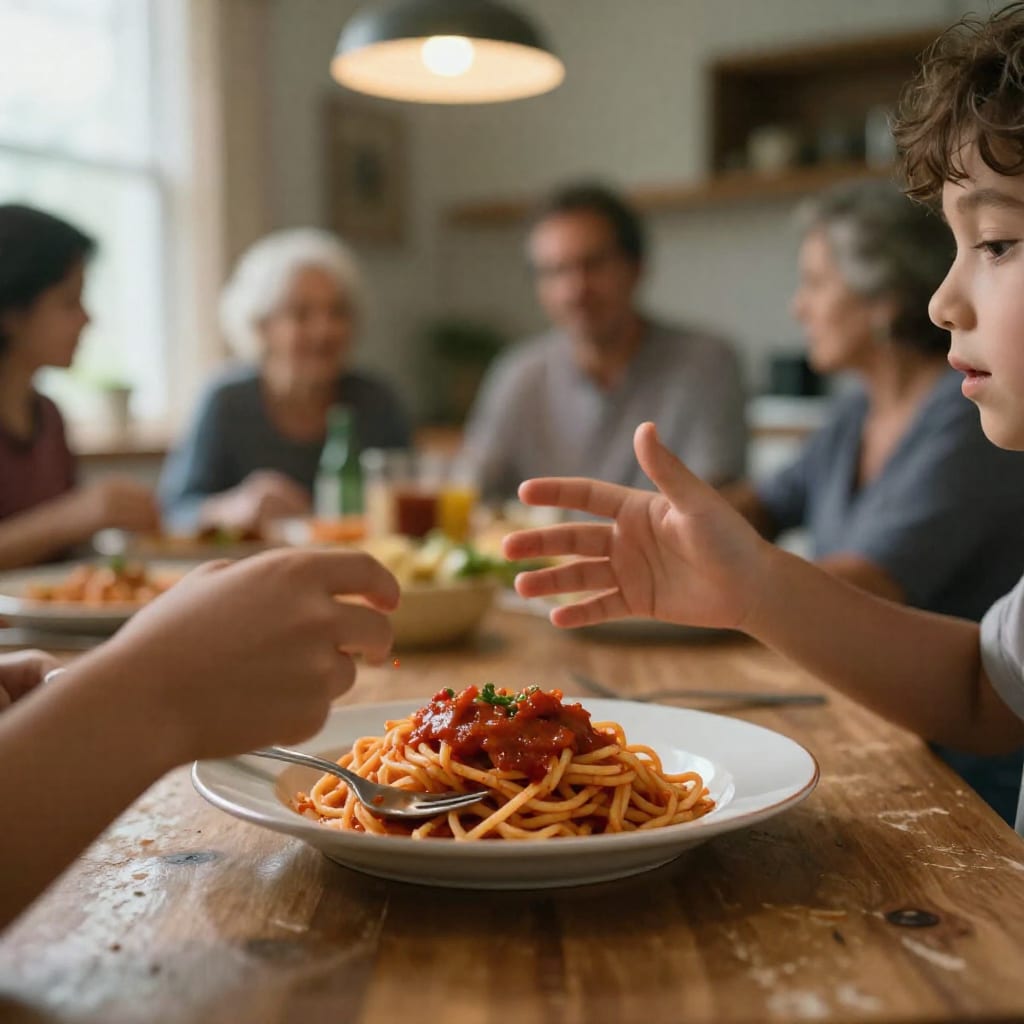
7. “What’s a skill you think should be taught in school but isn’t?” This taps into their daily reality but channels frustration into creativity. I’ve heard everything from “how to fix a wobbly table” to “how to know if a friend is a real friend.” It’s a low-key way to uncover anxieties and interests, and it positions them as a forward-thinking education reformer.
8. “If you could be a fly on the wall in any room in the world, which room would you pick?” The follow-up is crucial: “What do you hope you’d see?” This separates the nosy from the curious. My son wanted to be in the NASA control room during a rover landing; my daughter chose the backstage of a Taylor Swift concert to see “if she eats normal snacks.” Both answers led to richer stories than any school update.
9. “What’s the worst smell in the entire world, and when did you first encounter it?” This is pure, visceral gold. It’s a shared sensory experience that everyone has a strong opinion on. You’ll hear about rotten milk, gym bags, a mysterious fridge odor from 2019—and the storytelling comes with dramatic sound effects. It’s a perfect family conversation prompt for a night when everyone’s tired and needs a low-effort laugh.
10. “Without saying a name, can you describe a famous person so badly that we can still guess it?” “He runs really fast and his legs are just… a lot.” “Usain Bolt?” The worse the description, the funnier the game. This is a masterclass in abstract thinking and forces them to focus on unique, non-obvious traits. It’s a game that can stretch on for the entire meal.
11. “What’s one thing you’d change about the internet if you could magically enforce it?” This is a 2026-specific question that acknowledges their digital landscape. I’ve gotten surprisingly profound answers, from “no anonymous comments” to “all videos must be exactly 3 minutes, no more.” It respects their expertise in a world we often just police.
12. “If our family was a band, what instrument would each person play?” This is a personality test in disguise. When my husband was assigned the “loud but enthusiastic triangle,” we all learned something about how his energy is perceived. It’s a gentle, indirect way to talk about family dynamics and individual roles without a heavy sit-down.
13. “What’s a question you’re secretly hoping no one ever asks you?” This one is for older kids and requires a bravery pact. You must go first and share something real, like “I hope no one asks me if I actually understand cryptocurrency.” It’s a moment of genuine vulnerability that can flip a superficial chat into a deep, trusting exchange. It’s not for every night, but when the mood is right, it’s the most powerful tool in the box.
How to Keep the Conversation Flowing (Without Feeling Like an Interrogation)
The perfect starter question is just the fuse; you need to keep the rocket in the air. The most common mistake I made early on was treating a good answer like a finish line. My son would say something hilarious about a rude goose, and I’d immediately pivot to the next question on my mental list. This kills the vibe. The art of keeping dinner conversation going lies in the follow-up, and the single best follow-up is a simple, genuine “Wait, tell me more about that part.” It signals that you’re listening to the story, not just waiting for your turn to talk. Another powerful move is the reflective statement: instead of a question, just say, “So you think geese are basically the bullies of the park.” This gives them a chance to correct you, refine their idea, or laugh and expand. It’s a conversation, not a deposition.
Active listening is a buzzword, but at the dinner table it looks very practical: put your fork down and make eye contact for the crucial three seconds after they finish a thought. That tiny pause is an invitation for them to add the real treasure, the afterthought they weren’t sure was worth sharing. I’ve also learned to embrace the tangent. The best family dinner talk tips I have ever gotten came from a friend who said, “Let the conversation be a pinball, not a train.” If a question about a favorite food spirals into a debate about whether a hot dog is a sandwich, you’re winning. That’s where the inside jokes are born. My family now has a recurring bit about “Supreme Leader” decrees that started from question one and now pops up on car rides. The goal isn’t to cover a list of topics; it’s to build a shared language where everyone feels heard and a little bit silly.
What to Do When They Still Won’t Talk (Realistic Solutions for Tough Nights)
Some nights, even a question about rude geese lands with a thud. You’ve got a toddler fixated on a single noodle, a teenager radiating silent fury, or a kid who just tanked a math test and is spiraling. Pushing harder is the worst possible move. I’ve learned to read the room and pivot to a parallel activity instead of a face-to-face interrogation. On a night when my daughter was clearly done with the world, I simply said, “I’m too tired to talk. Want to just build the tallest thing we can out of these green beans?” We ended up creating a wobbly Eiffel Tower and, somewhere in the silent construction, she started talking about a problem with a friend. The pressure valve had been released.
This is where the principle of dealing with dinner conversation silence becomes crucial: connection doesn’t always require words. A low-pressure alternative is a shared listening game. I’ll say, “Let’s all be quiet for 60 seconds and then each name one sound we heard.” It’s a mindfulness reset that often breaks the moody spell. For a phone-addicted tween, I’ve had success with a playful bargain: “You can show me three of the funniest memes on your phone, and then I get to ask one question about your day.” It acknowledges their world and makes conversation a fair trade, not a confiscation. When a child is genuinely upset, the starter question is not the tool. Family dinner bonding tips for hard nights involve simply narrating your own day in a vulnerable, low-stakes way: “I had a rough day because I spilled coffee on my shirt and then had to give a presentation. I just felt like a mess.” Sometimes, modeling your own small failure is the only key that fits the lock. They might not talk, but they’ll feel less alone, and that’s a far more important dinner-table win.
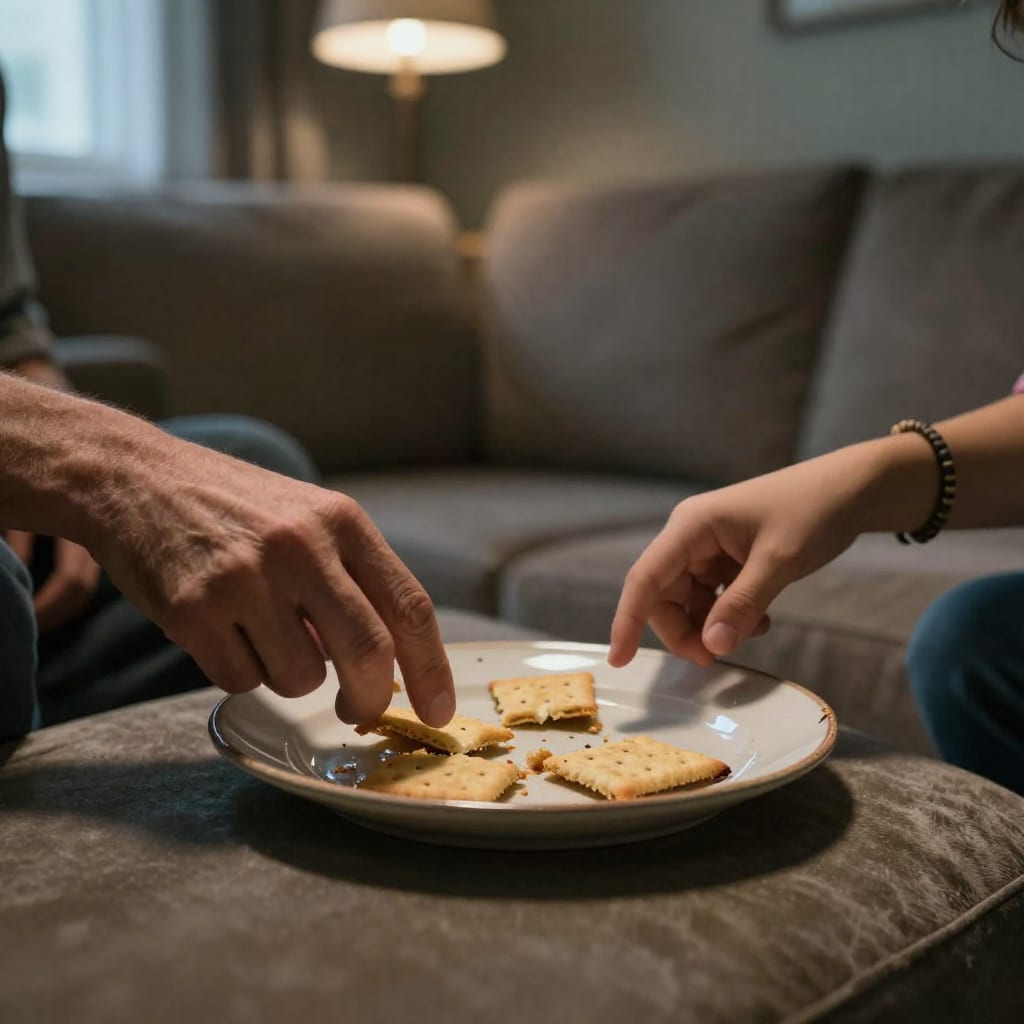
Ultimately, the dinner table is just a stand-in for any moment of connection. The real test isn’t whether you got a full report on their day, but whether they left the table feeling a little more known and a little less alone. There are nights when my family’s entire conversation consists of a five-minute debate about whether a Pop-Tart is a ravioli. On paper, it’s nonsense. In reality, it’s the glue. So, the next time you’re met with a wall of silence, try dropping the agenda. Share your own weirdest thought from the day, ask for their opinion on a silly ranking, or just build a green-bean skyscraper together. Worth bookmarking that list of starters for the next time the mashed-potato dam reappears. The conversation is already there; it just needs a better invitation.